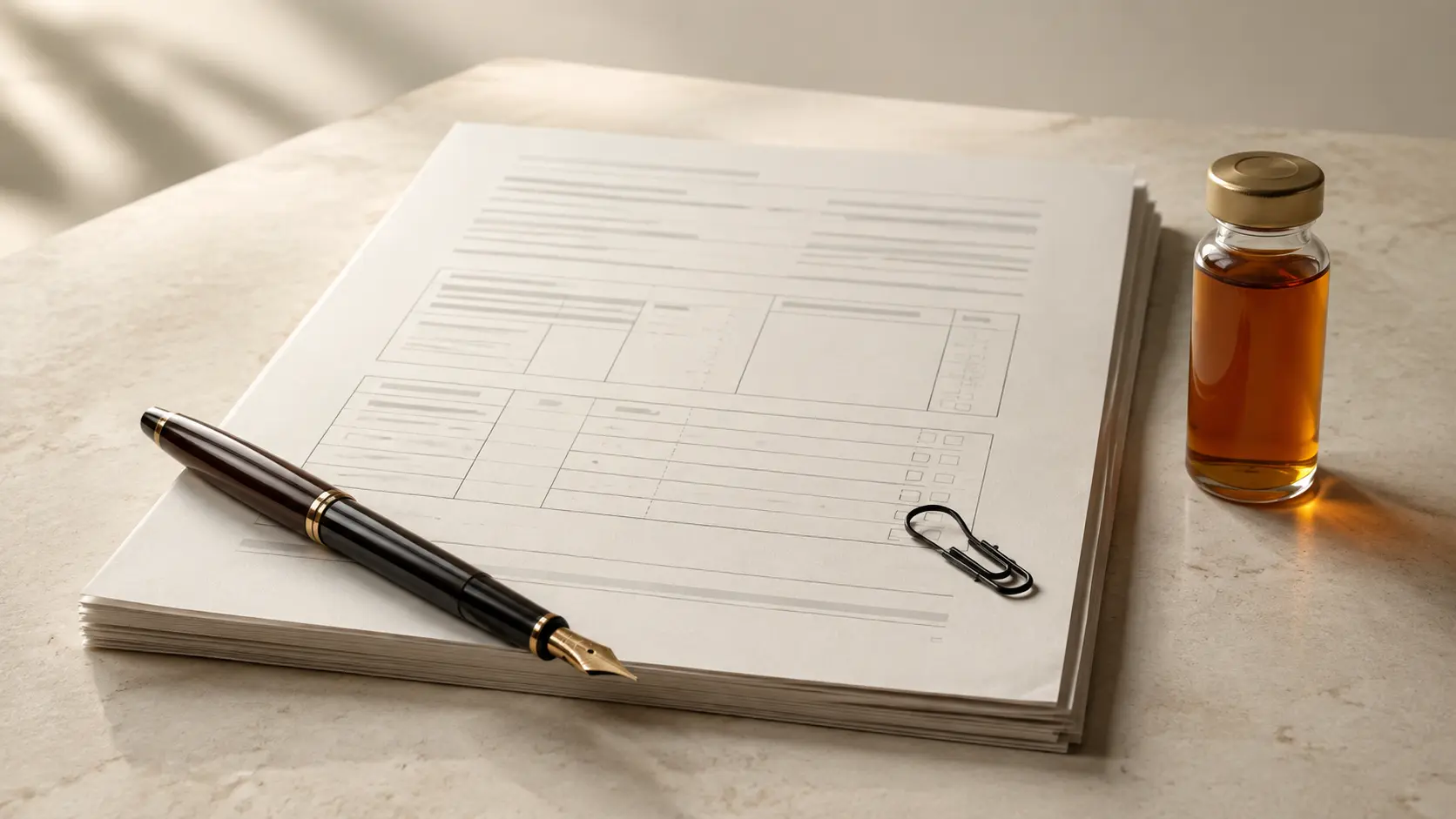

What traceability actually means
Almost every premium honey brand tells an origin story. Traceability is the evidence behind that story: the chain of records connecting a finished jar or bulk container to the batch, packing event and source information recorded for that product.
A useful system works in both directions. It should help identify where a batch came from and where that batch went. The exact records vary by supply chain, but the links should be specific enough to investigate a question without relying on memory or marketing copy.
The practical record chain
For honey, a buyer should expect the commercial product to be connected through a consistent batch or lot identifier. That identifier is the thread running through the document set.
- Source and origin information recorded for the honey supplied.
- Extraction, handling or processing records relevant to the batch.
- Packing records linking bulk product to the final pack format.
- A product specification and applicable analytical report bearing the same batch identity.
- Shipment records showing where the identified batch was supplied.
Why it matters in export trade
Export adds distance, more parties and market-specific requirements. A clear record chain helps an importer assess an origin statement, match documents to the goods received and respond precisely if a customer or regulator asks about a batch.
Traceability does not prove every quality claim by itself. It makes a claim testable by connecting it to a defined product and record set. That distinction matters when provenance contributes to premium positioning.
Origin and labelling in Australia
Most food sold at retail in Australia must carry country-of-origin information under the applicable information standard. Export labels and documents must also be assessed against the destination market and the final product format; an Australian retail label is not automatically an export-compliance solution.
For a buyer, the practical question is whether the origin statement presented on the product is consistent with the records held for that batch.
What a buyer can reasonably verify
A buyer may not inspect every step personally, but the document set should allow the important pieces to be cross-checked.
- The batch code on the product appears consistently on the relevant records.
- The origin statement is supported by source information rather than imagery alone.
- The product specification and analytical report relate to the batch offered.
- The supplier can answer a batch-level question with records, not an improvised explanation.
A story versus a record
Landscape photography can communicate atmosphere; it cannot establish provenance. A batch identifier connected to source, specification, packing and test records is operational evidence. Premium brands need both narrative and proof, but they should never confuse the two.
SELVEH’s launch framework is being developed around defined specifications, batch identity and clear source documentation. The final evidence will depend on the selected supplier, product and batch.
Primary references
This article is general information for commercial product literacy. It is not legal, regulatory, scientific or medical advice, and it does not certify any SELVEH product or batch.