
01 · Sample purpose
Identify what the sample is supposed to prove
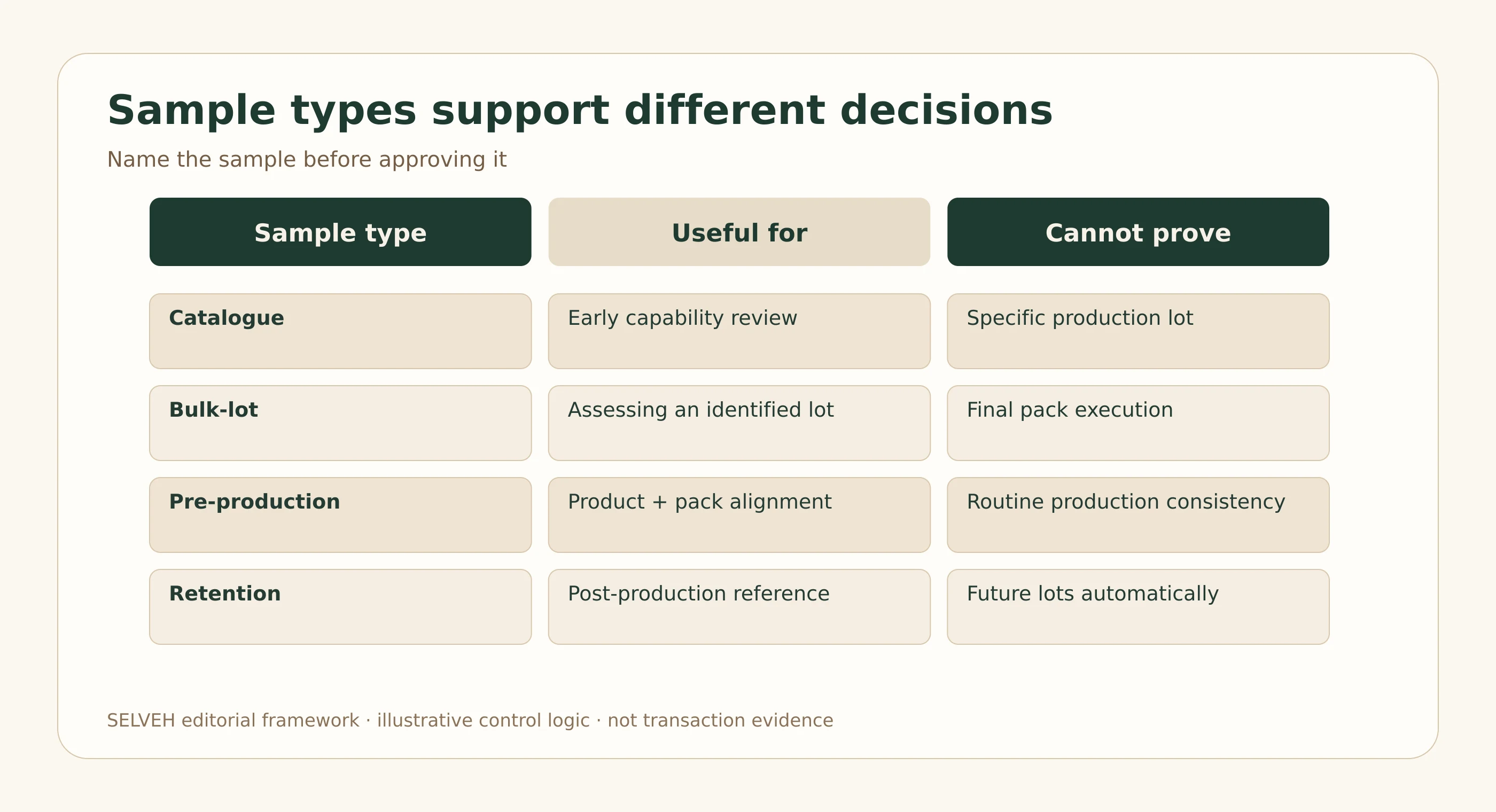
A supplier may send a catalogue sample, a sample from an available bulk lot, a pre-production sample, a finished-pack mock-up or a production retention sample. These are not interchangeable.
A catalogue sample may help a buyer understand a supplier's general capability. A bulk-lot sample may support a decision about a specific honey lot. A finished-pack sample can test the jar, closure and artwork. Only a production-linked sample can support a conclusion about the actual goods being released.
Before opening the jar, record the sample type and the decision it is intended to support. If that purpose is unclear, “sample approved” has no controlled meaning.
02 · Identity
Create a sample identity before creating an opinion
Assign or record a sample code, supplier name, date received, product description, stated origin, MGO grade, floral-source claim, batch or lot reference, pack format and the person who supplied it.
Photograph the sample as received and retain the supplier's label or accompanying note. If the sample has no batch identity, treat it as an exploratory sample rather than evidence for a production lot.
Store the sample under the stated conditions and record any obvious damage, leakage, broken tamper feature or temperature concern on arrival. Chain of identity matters because a later result is only useful if the buyer can identify what was assessed.
03 · Evidence match
Match the sample to the proposed specification and laboratory evidence
Ask which specification and analytical report apply to the sample. Check product name, sample or batch identifier, dates, MGO result, method, laboratory, report status and any other agreed parameters.
NATA explains that test reports describe the activities performed and the results, while accreditation applies to a defined scope. A supplier name or laboratory logo does not resolve a mismatched batch identifier or an out-of-scope test.
Do not attach a historic COA to a new sample merely because the declared grade is similar. If the sample is only representative and not batch-linked, state that limitation in the approval record.
04 · Sensory review
Use sensory review as a controlled observation, not a laboratory substitute
Record appearance, colour, aroma, flavour, mouthfeel, viscosity, crystallisation and any signs of fermentation, smoke, foreign odour or contamination. Use neutral language and a consistent evaluation setting.
Temperature affects viscosity and aroma release. Compare samples at a consistent, recorded temperature and use clean utensils. Where several suppliers are being assessed, coded presentation can reduce brand and packaging bias.
Sensory acceptance cannot prove MGO, origin, authenticity, residue compliance or microbiological status. It answers whether the assessed sample is commercially acceptable to the buyer under the defined review conditions.
05 · Review dimensions
Keep observations and evidence in separate columns
| Dimension | What the sample can show | What still needs evidence |
|---|---|---|
| Appearance and texture | Observed colour, clarity, viscosity and crystallisation state. | Production tolerance and stability over time. |
| Flavour and aroma | Buyer acceptance of this sample. | Consistency across lots and absence of hazards. |
| MGO grade | Nothing reliable by taste alone. | Batch-linked laboratory result and claim basis. |
| Origin and authenticity | Nothing conclusive from visual review. | Traceability, claim evidence and applicable testing. |
| Finished pack | Fit, finish and observed functionality of the submitted unit. | Production controls, legal measurement and transport performance. |
06 · Finished pack
Approve packaging separately from the honey
A good honey sample in a temporary jar does not approve the final pack. Review the production-intended jar, closure, liner, tamper-evidence feature, label material, coding area, case pack and transport protection through separate controls.
Check closure operation, leakage, label position, scuffing, legibility, colour consistency and whether the declared net quantity can be marked correctly. A mock-up made by hand may not demonstrate production-line placement or adhesion.
Record whether the submitted packaging is stock, prototype, decorated sample or production-representative. Packaging substitutions after approval should trigger documented review.
07 · Quantity control
One correctly filled jar does not prove production compliance
The National Measurement Institute requires pre-packaged goods to carry the net measurement and describes the systems used to control package quantity. A single supplier sample cannot demonstrate that a production run complies with the applicable average or minimum quantity rules.
Ask the packer how fill quantity is controlled and which evidence will be available for the production run. Keep the sample review focused on the submitted unit while leaving batch measurement release to the production control.
Do not weigh a sealed jar and subtract an assumed tare weight unless the method and packaging tare are properly controlled.
08 · Tolerances
A golden sample needs written tolerances
Keeping an approved reference sample can help align the buyer and supplier, but natural honey changes with temperature, storage and time. A “match this exactly” instruction is unrealistic without defined tolerances and conditions.
State which attributes are critical, what variation is acceptable, how the comparison will be made and how long the reference sample remains suitable. Separate natural variation from defects and from changes that would affect a regulated or contractual claim.
Where colour or viscosity is commercially important, use a defined method rather than relying only on memory or an uncalibrated phone photograph.
09 · Approval status
Use HOLD, CONDITIONAL APPROVAL, APPROVED and REJECTED deliberately
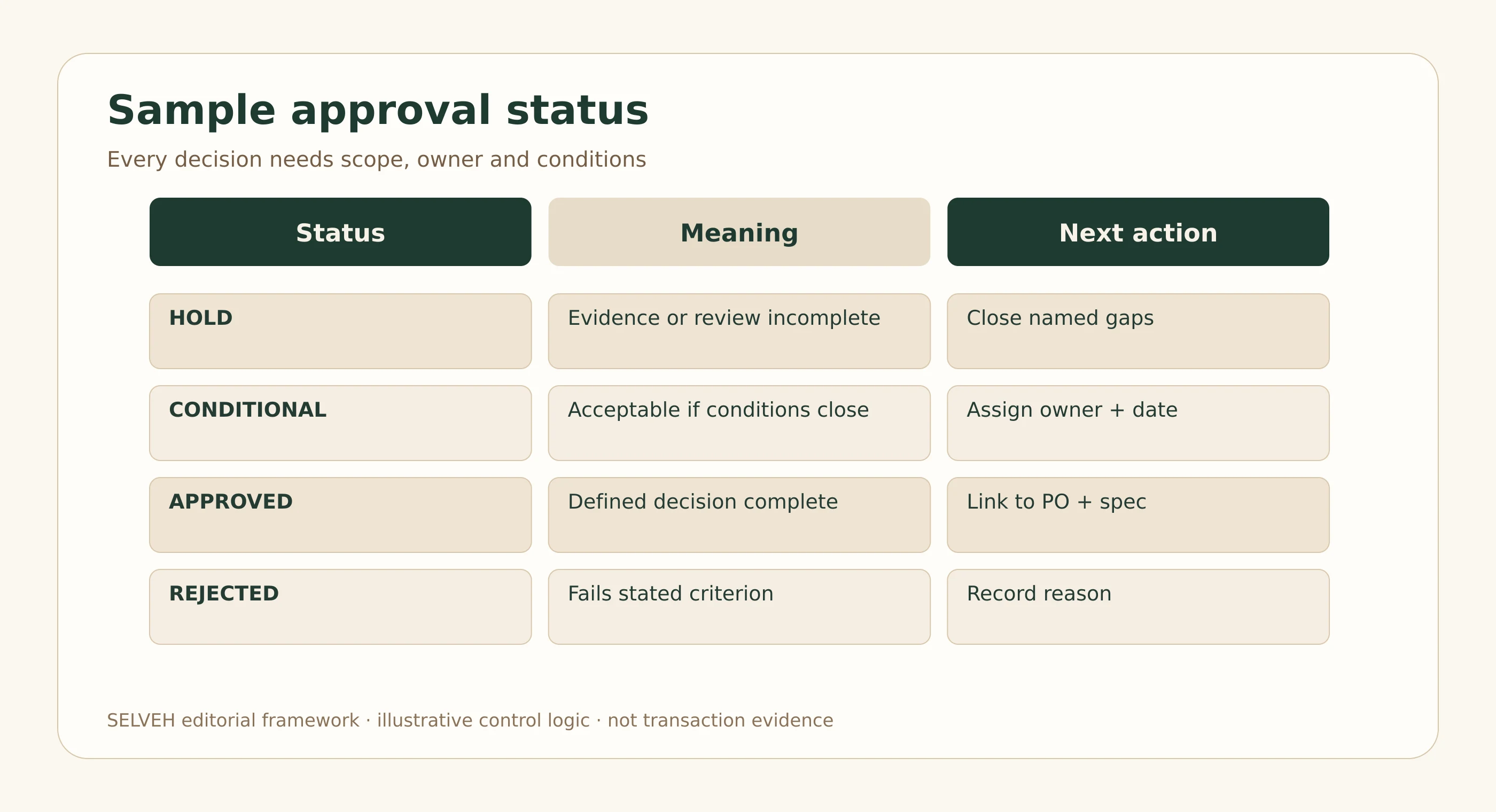
HOLD means the buyer cannot decide because required identity, evidence or review is incomplete. CONDITIONAL APPROVAL means the sample is acceptable only if named conditions are closed. APPROVED means the defined sample decision is complete. REJECTED means the sample fails a stated criterion.
Every conditional approval should list the condition, owner and due date. “Approved subject to final checks” is too vague for production.
Approval should identify who had authority to decide and whether it applies to honey, packaging, artwork, or the entire finished-product configuration.
10 · Change control
Translate sample approval into the purchase order and production controls
After approval, attach the sample code and approved specification version to the purchase order or project record. Record any critical sensory attributes, packaging configuration, artwork version and evidence requirements.
Define what happens if the production lot differs. The supplier should not silently substitute a honey lot, jar, closure or label stock because the commercial description appears similar.
Sample approval reduces ambiguity; it does not transfer responsibility for production release, destination compliance or batch evidence away from the parties named in the transaction.
11 · Buyer tool
Use a sample approval record that preserves the evidence boundary
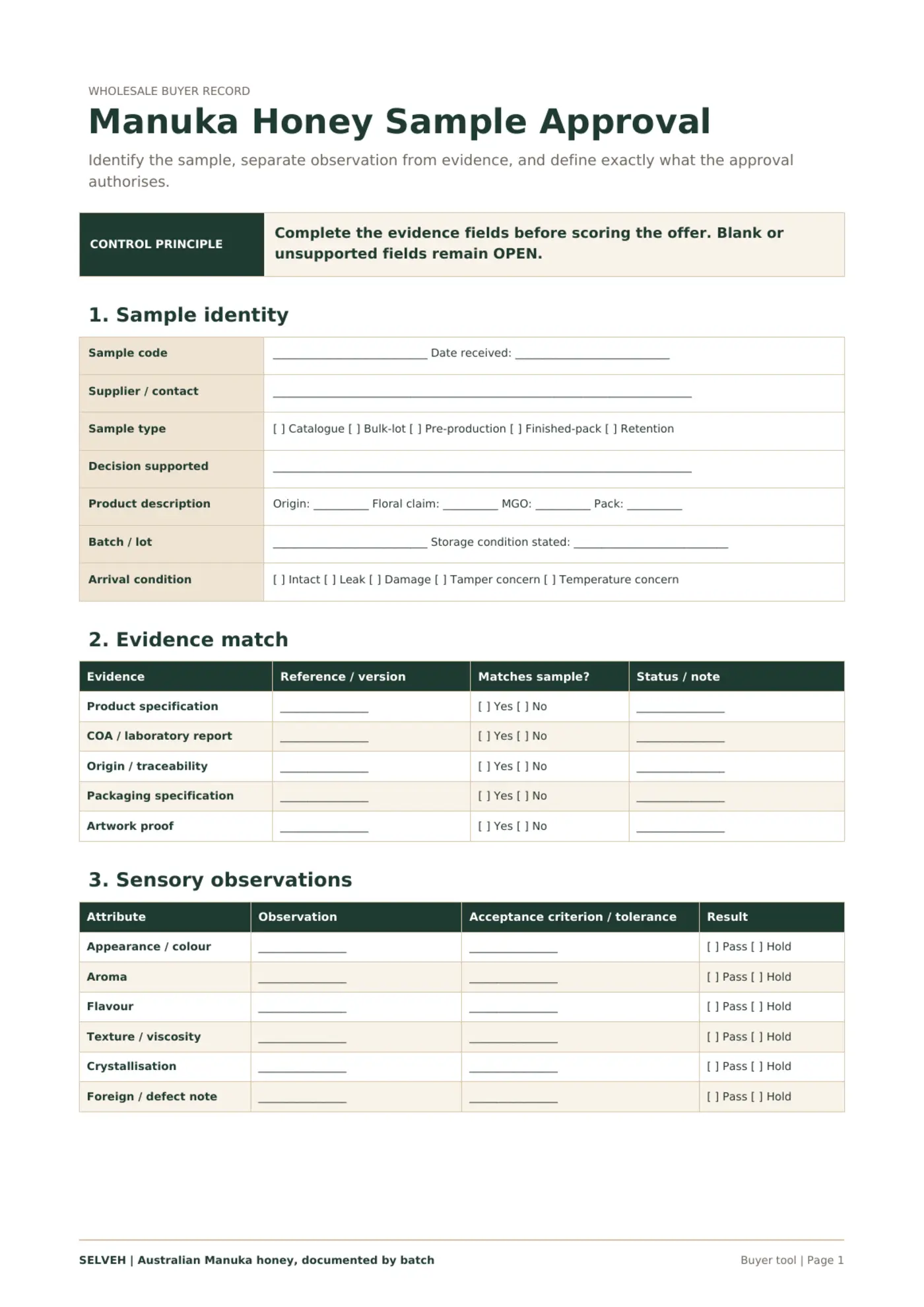
The downloadable record separates sample identity, evidence reviewed, sensory observations, packaging review, tolerances, conditions and the final decision. It also records what the sample does not prove.
This tool is not a laboratory report, sensory standard, production release certificate or guarantee of commercial supply.
12 · Red flags
Investigate these sample situations
- The sample has no code, batch reference or stated purpose.
- The attached COA relates to a different or unclear lot.
- A temporary jar is treated as approval of final packaging.
- The supplier says natural variation means no specification or tolerance is possible.
- Production is scheduled while conditional approval items remain open.
- The sample is excellent but the quoted product, grade or pack is different.
13 · Buyer FAQ
Frequently asked questions
How many samples should a buyer request?
There is no universal number. Request enough to answer the defined decision and to understand whether the sample is representative. A single exploratory sample is weak evidence of ongoing lot consistency.
Should buyers taste Mānuka honey before ordering?
Sensory review is commercially useful, but it should sit beside specification, analytical and packaging evidence. It cannot replace them.
Does sample approval lock the production batch?
Only if the agreement identifies the sample, the applicable specification, tolerances and change-control obligations. Approval language alone may not do that.
Can a sample prove shelf life?
No. Shelf life requires a documented product basis and appropriate evidence over time. One sample at one date cannot establish the full durability claim.
Should the approved sample be retained?
A retained reference can help, provided storage conditions, identity, retention period and the limits of comparison are documented.
14 · SELVEH status
What SELVEH can state today
SELVEH can define the sample-approval method it intends to use and request coded samples, specifications and batch evidence from prospective suppliers.
SELVEH should not publish any supplier sample, sensory result, approved pack, MGO grade, golden sample or production tolerance as confirmed until the actual review and first-party records exist.
Sources
Official and technical sources
- Codex Alimentarius - CXS 12-1981 Standard for Honey
- NATA - Test reports explained
- NATA - ISO/IEC 17025 testing and calibration
- National Measurement Institute - Guide to the sale of pre-packaged goods
- National Measurement Institute - Average Quantity System
Source review: Sources reviewed 22 August 2026. The sample method remains a buyer framework and must be adapted to the actual specification and transaction.
Trade planning
Need a controlled sample-review process?
Tell us the target grade, pack, destination and decision stage. We will separate exploratory sampling from the evidence required before a wholesale commitment.
Start a trade enquiry